What a 5-second AI video shot costs in 2026, model by model
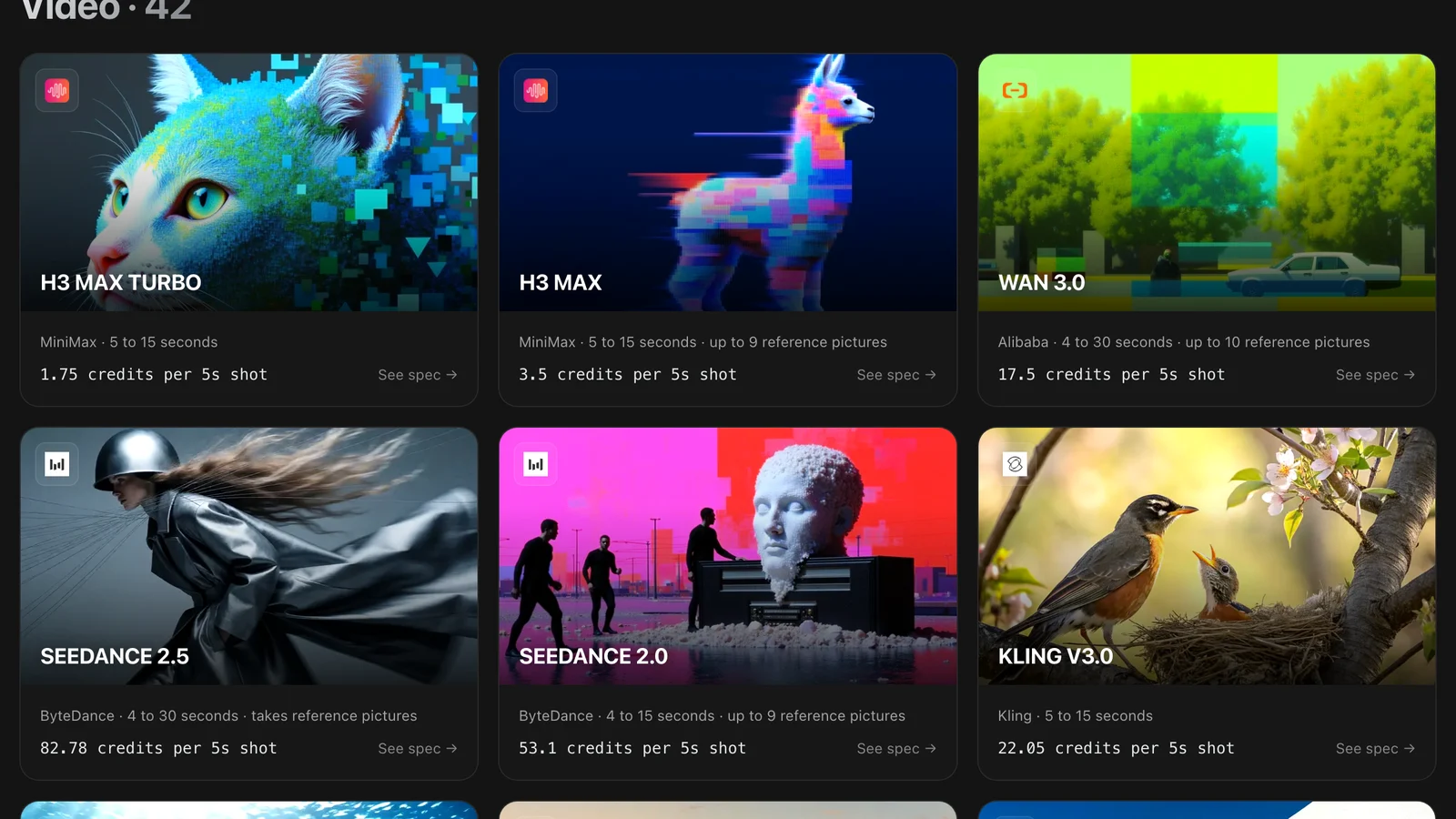
Every model on the platform makes the same thing here: a 5-second, 720p vertical shot. What that shot costs runs from 2.94 credits to 82.78 depending on which model you point at it. That is a 28x spread on identical footage length, and it is the single biggest lever you have over what a series costs you.
The numbers below are the live catalogue prices as of August 18, 2026. You never need this table to avoid a surprise, because the exact cost of the generation you are about to run is printed on the Generate button before you press it. The table exists so you can plan a shoot before you start one.
The table, cheapest first
One 5-second 720p shot, on every video model currently in the picker. Models that only run in 6-second blocks are shown at their real minimum.
| Model | Credits for one shot | What it is for |
|---|---|---|
| Kling v3.0 | 2.94 | Looks real, up to six camera cuts inside one generation |
| Seedance 1.0 Pro Fast | 4.73 | The drafting model. Will go as short as 2 seconds |
| Veo 3.1 Lite | 5.25 | Veo picture quality at the cheap end |
| Seedance 1.5 Pro | 5.67 | Holds a story across several shots |
| MiniMax Hailuo | 9.45 | Busy scenes with a lot of movement. 6-second minimum |
| Kling 2.6 Video | 12.25 | Dependable character movement |
| MiniMax H3 | 14.00 | Pictures, clips and sound in one prompt |
| Wan 2.7 | 17.50 | Fast and good-looking at the same time |
| Google Veo 3.1 | 17.50 | The most convincing physics on this list |
| Gemini Omni Flash | 22.75 | Edits the same scene turn after turn |
| Kling 3.0 Turbo | 24.50 | Kling 3.0 with a faster turnaround |
| Grok Video 1.5 | 24.50 | Takes up to 7 reference pictures |
| Happy Horse Video | 24.50 | First on the public leaderboard by blind human votes |
| Seedance 2.0 Mini | 27.07 | The Seedance look with first-and-last-frame control |
| FLUX 3 Video | 29.75 | Has a draft setting at a third of the price |
| Seedance 2.5 | 82.78 | 30 seconds in one take, up to 50 references at once |
Prices checked 2026-08-18. When a rate changes, the Generate button changes with it.
Try generating with H3 Max TurboHow to read it
The cheap end is for deciding, the dear end is for finishing. While you are still working out what a scene is, run it on Seedance 1.0 Pro Fast at 4.73 credits or Kling v3.0 at 2.94, and throw the misses away without wincing. Once the shot is right, re-run that one shot on the model whose look you actually want.
A retake costs the same as the first take, every time, on every model. So the order of operations matters more than the model choice: lock the script first, block the scene on a cheap model second, and spend the expensive credits exactly once.
Seconds multiply everything. The table is priced at 5 seconds; a 10-second shot on the same model costs twice the number in the column. If a beat only needs 3 seconds, the models with a 2-second floor let you pay for 3 instead of rounding you up to 5.
What your 40 free credits actually buy
Every new account starts with 40 credits, no card. On this table that is 13 shots on Kling v3.0, 8 on Seedance 1.0 Pro Fast, or 7 on Veo 3.1 Lite. On Seedance 2.5 it is zero shots, because one costs 82.78.
That is not a trap, it is the honest shape of the catalogue. Free credits are for finding out whether the tool does what you need. Spend them on the cheap rows, and judge picture quality from each model’s sample page rather than from your own balance.

Free to start
40 credits when you sign up
40 free credits, yours for 14 days. Go make something great.
- SOTA models
- Infinite canvas
- Director stage
- MCP access
Got questions left?
Do these prices change?
Yes, when a model’s rate changes. The table carries the date it was checked, and the Generate button always shows the live number before you confirm.
Does a retake cost less than the first take?
No. Every generation is a fresh run at the listed price, on every plan. The only free one is a run that fails on our side, which refunds itself within 60 seconds.
Why are two models the same price but different quality?
The price tracks what the model costs to run, not how good it is at your scene. A cheaper model genuinely wins some shots. That is why drafting cheap first is the whole strategy.